One of the biggest jumps from high school to college (for me) wasn’t the difficulty — it was the lack of structure.
High school is basically pre-scheduled: same classes, same times, same rhythm. College was the opposite. Every class ran differently, with different platforms and wildly different grading setups (anything from “just a midterm/final” to weekly homework, labs, projects, and quizzes).
Here are the systems I tried to keep up — what worked, what didn’t, and what I use now.
TL;DR
- Winging it works… until you get busy.
- Google Calendar is great for hard deadlines, not long-term projects.
- Planner/time-blocking is powerful but high maintenance.
- Reclaim.ai is the first system that scaled when I had a lot going on.
System 1: Just winging it
In high school I didn’t even set an alarm, so in college I tried keeping everything in my head.
It worked longer than it should have (I only missed one assignment out of ~50), but the system had no “memory.” As soon as my workload got heavier, it turned from a strategy into a risk.
Pros
- Zero setup
- Fine when life is simple
Cons
- Easy to forget things
- No planning ahead
- Falls apart when you get busy
System 2: Google Calendar (events + reminders)
This was my first real system. I made an event for each assignment with the due date/time and a reminder (usually 24 hours before).
For classes with clear deadlines, it was amazing. I’d check what was urgent, do that, repeat — and I started finishing things early.
The limitation showed up with extracurriculars and research: the work is real, but deadlines are fuzzy. Calendar events tell you what’s due, but not always what to do next.
Pros
- Great for hard deadlines
- Easy weekly overview
- Low effort once it’s a habit
Cons
- Weak for long-term, open-ended work
- Can become cluttered or ignored over time
System 3: Franklin Covey-style planning (but digital)
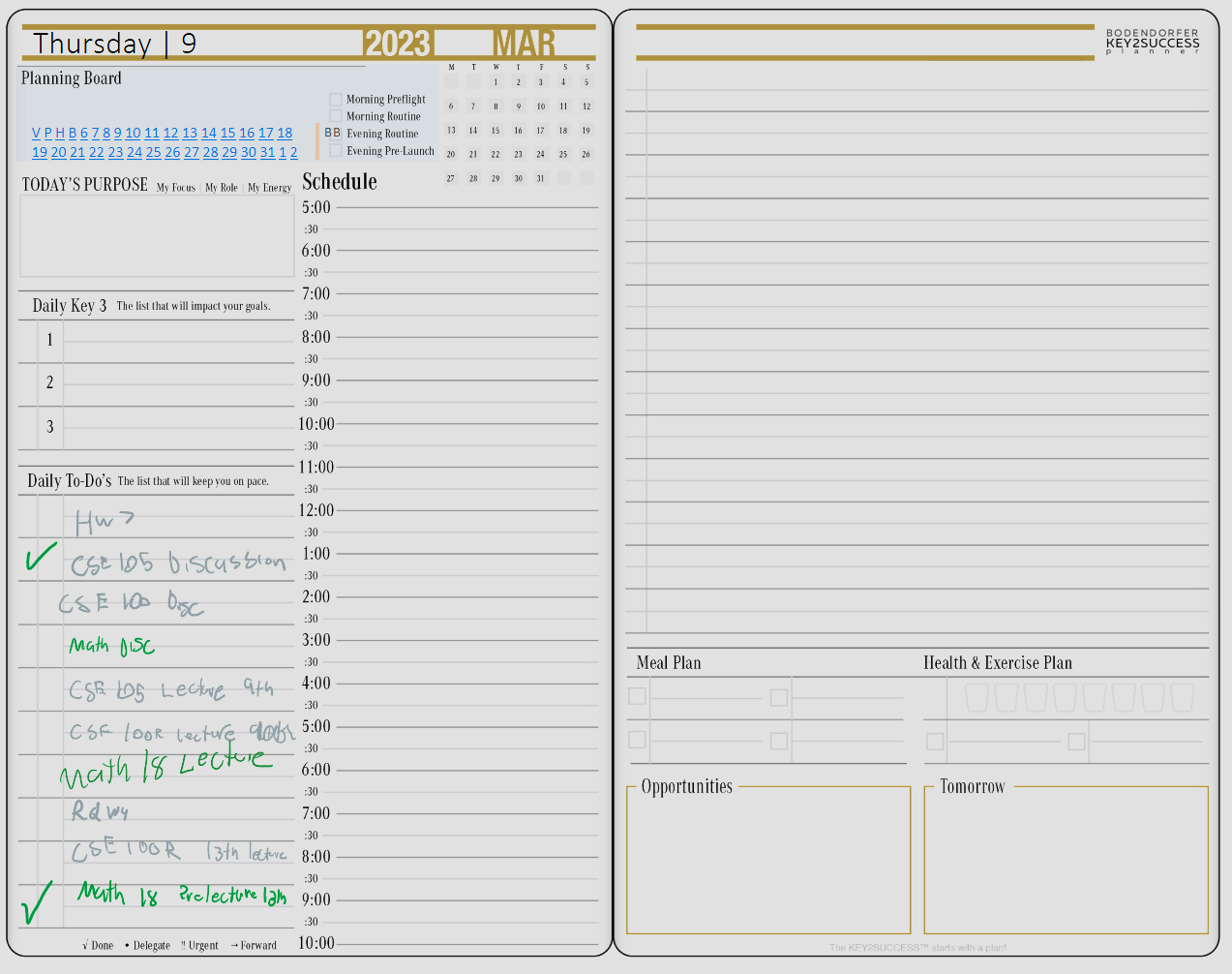
I wanted something that felt more like an actual plan. I tried a Franklin Covey planner, then switched to a OneNote template that mimicked it.
The biggest win here was time-blocking: assigning my day in 30-minute chunks. When I stuck with it, I felt super in control — and it made my plans more realistic.
But it was also a lot of overhead. When I got stressed or tired, the planning was the first thing to slip. In reality, most days I only filled out the to-do list and skipped the time-blocking.
Pros
- Strong prioritization
- Time-blocking keeps plans realistic
- Good for breaking down big projects
Cons
- High maintenance
- Easy to drop during busy weeks
System 4: Reclaim.ai (auto-scheduling)
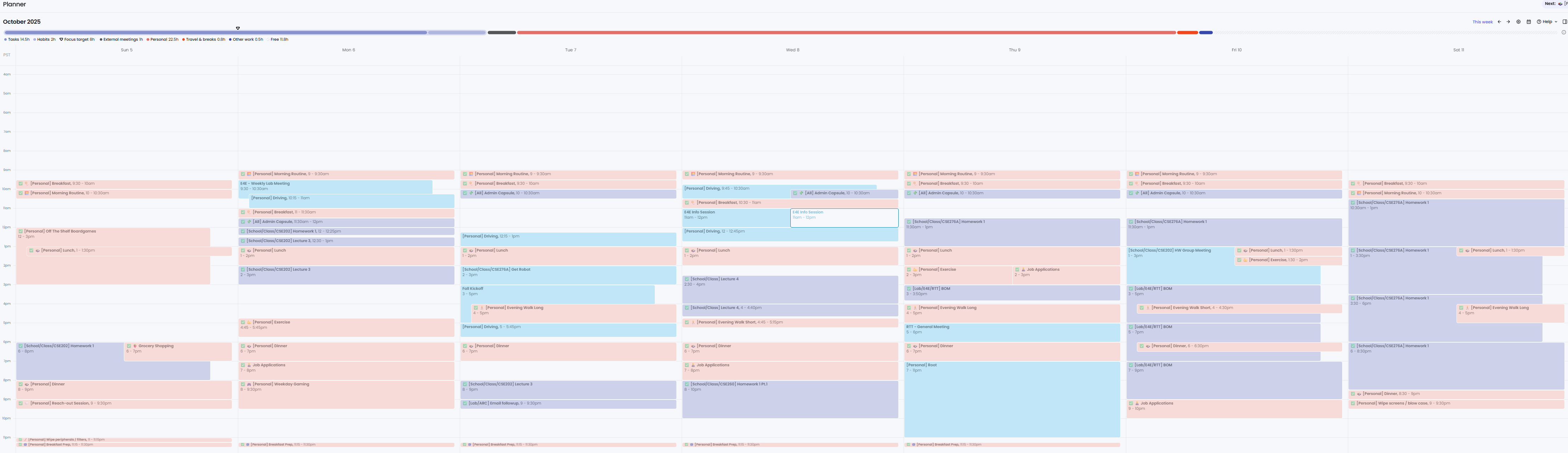
This is what finally scaled. Reclaim turns tasks into actual calendar blocks automatically based on your availability.
The best part: the system doesn’t “break” if you have an off day. If I ignored the schedule, I could come back the next day and tasks would reshuffle automatically.
The main challenge is estimating time and inventing deadlines for open-ended work — but once you get decent at that (and adjust as you go), it’s incredibly effective.
Pros
- Auto-schedules tasks into real time
- Reschedules automatically when plans change
- Makes long-term work visible week-to-week
Cons
- Requires rough time estimates
- Paid tool
- Can feel too calendar-heavy for some people
What I use now
My current setup is simple:
- Calendar for reality (classes, meetings, hard deadlines)
- Auto-scheduler for execution (ongoing tasks/projects)
- Quick weekly review to clean things up and reset priorities
The main lesson: the best system is the one that still works when you’re tired, busy, and overwhelmed — not the one that’s perfect on an ideal week.